30 Jun 2026
30 Jun 2026

The False Sense of 24/7 Security in Modern EnterprisesModern enterprises operate in environments that never stop—cloud infrastructure, APIs, remote access, and digital platforms run continuously across regions and time zones.Yet, while business operations have become truly 24/7, many security operations have not evolved at the same pace.Organizations invest in monitoring tools, deploy security platforms, and generate continuous alerts. On the surface, this creates the impression of always-on protection. In reality, however, continuous visibility doesn't guarantee continuous defense.This gap between perceived security and actual protection is where risk begins to accumulate—often unnoticed until an incident occurs.24/7 Monitoring ≠ 24/7 ProtectionMany organizations assume they are protected simply because their systems are being monitored around the clock.SIEM platforms continuously collect and analyze logsAlerts are generated in real timeDashboards provide ongoing visibility into system activityHowever, monitoring alone does not prevent breaches. In many cases:Alerts are not investigated immediatelyResponse depends on manual triage and limited SOC coverageEscalation is delayed outside business hoursSecurity tools operate in isolation without coordinated actionThe result is a critical gap: threats may be detected, but not contained in time.Insight: Without immediate response, monitoring becomes passive. It provides visibility—but not protection—creating a false sense of 24/7 security.The Real Gap: Detection Without ResponseOver the years, organizations have significantly improved their ability to detect threats. Advanced tools, AI-driven analytics, and real-time alerting have made visibility more accessible than ever.Yet despite these advancements, breaches continue to occur. The underlying issue is not detection — it's response speed.Attackers exploit delays between detection and actionManual investigation slows down containmentFragmented tools prevent coordinated responseExtended dwell time increases the scale and impact of incidentsIn a real-time threat landscape, even short delays can lead to significant consequences.Shift: Security effectiveness is no longer defined by how quickly threats are detected—but by how quickly they are contained and neutralized.Why Traditional SOC Models Struggle to Deliver True 24/7 DefenseAs cyber threats evolve in speed and sophistication, maintaining effective security operations is no longer just about deploying tools—it requires a continuous, coordinated, and scalable operating model.For many organizations, building an internal Security Operations Center (SOC) seems like the logical next step. However, in practice, delivering True 24/7 Defense is far more complex than it seems.The Complexity Behind Building a True 24/7 SOCA modern SOC is not simply a team monitoring alerts—it is a fully integrated ecosystem that must operate continuously, accurately, and at scale.To function effectively, a true 24/7 SOC requires:Tiered security analysts (L1–L3) operating in continuous shiftsDefined workflows for detection, investigation, and responseIntegrated security tools (SIEM, EDR, network monitoring, etc.)Real-time orchestration and automation to reduce manual effortOngoing tuning and optimization to maintain detection accuracyAt the same time, organizations face structural challenges:Shortage of skilled cybersecurity professionalsHigh cost of maintaining 24/7 operationsAlert fatigue leading to missed or delayed responsesFragmented tools that do not communicate effectivelyInconsistent coverage across hybrid and distributed environmentsThese challenges make it difficult to sustain a SOC that is both continuous & effective.Result: Instead of delivering real-time protection, many SOCs become reactive, resource-constrained, and difficult to scale.What True 24/7 Defense Actually Looks LikeTo defend against modern threats, security operations must match the speed, scale, and continuity of the attack surface. A true 24/7 SOC goes beyond monitoring — it operates as a continuous protection engine.Key characteristics include:Continuous monitoring across all environments(networks, endpoints, cloud systems, and applications).Real-time threat detection and prioritizationusing behavioral analytics and threat intelligence.Immediate incident response and containmentto reduce dwell time and prevent escalation.AI-assisted analysis and automationto accelerate decision-making and response actions.Unified visibility across IT and OT environmentsensuring no blind spots in complex infrastructures.In this model, security is no longer reactive. It becomes proactive, responsive, and always-on.Transformation: From periodic monitoring → continuous, real-time defenseOutsourced SOC: A Smarter Operating Model for Continuous ProtectionTo achieve true 24/7 defense, organizations must move beyond fragmented tools and limited internal capacity toward a fully orchestrated, always-on security operating model.A 24/7 outsourced SOC provides this shift—combining continuous monitoring, real-time response, and expert-led operations into a single, scalable service.SALT enables this transformation by delivering an integrated cybersecurity approach that aligns technology, automation, and human expertise—ensuring that security is not only monitored, but actively managed and continuously improved.A. From Tools to Orchestrated Security OperationsMany organizations already have security tools in place—SIEM, endpoint protection, network monitoring, and more. However, without orchestration, these tools often operate in silos.SALT bridges this gap by transforming disconnected tools into a unified and orchestrated security ecosystem. Instead of relying on isolated alerts, SALT integrates monitoring, detection, and response into a continuous workflow—ensuring that every signal is correlated, prioritized, and acted upon in real time.Value with SALT:Centralized visibility across security layersAutomated correlation of events across systemsFaster escalation and coordinated responseElimination of manual, fragmented processesOutcome: Security operations evolve from tool-based monitoring into intelligent, orchestrated protection.B. Expert-Led + AI-Driven Security OperationsTechnology alone cannot deliver effective cybersecurity — especially in complex and rapidly evolving threat environments.SALT combines experienced security professionals with AI-driven analytics and automation, resulting in:AI accelerates detection and prioritization.Automation enables immediate response actionsSecurity experts validate, investigate, and respond to threatsThis approach ensures that threats are not only detected quickly but also handled with precision and context-aware decision-making.Value with SALT:Reduced Mean Time to Detect (MTTD) and Respond (MTTR)High-confidence threat validation by expert analystsContinuous monitoring without dependency on internal resourcesScalable operations without increasing headcountOutcome: Organizations benefit from enterprise-grade security expertise without the complexity of building and maintaining an internal SOC.C. Core Capabilities of a 24/7 Outsourced SOCSALT delivers a comprehensive set of capabilities designed to support end-to-end security operations:Continuous 24/7 MonitoringAcross networks, endpoints, cloud environments, and applications.Advanced Threat DetectionUsing SIEM, behavioral analytics, and AI-assisted insights.Incident Investigation, Response, and ContainmentRapid identification and mitigation of threats to reduce impact.Vulnerability Management & Risk IdentificationProactive detection of weaknesses before exploitation.Compliance-Ready Reporting & DocumentationSupporting regulatory requirements and audit readiness.Continuous Security Posture ImprovementOngoing optimization of detection rules, workflows, and response strategies.Value with SALT:Fully managed, always-on security operationsIntegrated IT and OT security visibilityAlignment with enterprise security and compliance needsContinuous improvement through data-driven insightsOutcome: Organizations transition from fragmented and reactive security practices to a mature, resilient, and continuously evolving cybersecurity posture.Industry Impact: Securing Always-On, High-Risk EnvironmentsIn today’s digital economy, cyber risk is not evenly distributed. Some industries operate in environments where downtime, data breaches, or delayed response can have immediate and severe consequences.A 24/7 Outsourced SOC enables these organizations to maintain continuous visibility, rapid response, and operational resilience, even in the most complex and high-risk environments.a) Banking & Financial ServicesThe Challenge:Financial institutions are prime targets for cyberattacks due to the high value of financial data and transactions, combined with strict regulatory requirements.How SALT Helps:SALT’s 24/7 outsourced SOC delivers real-time monitoring and rapid incident response across core banking systems, digital channels, and third-party integrations—ensuring threats are identified and contained before escalation.Outcome:Reduced risk of financial loss and fraud-related incidentsImproved compliance with regulatory and audit requirementsStrengthened customer trust and data protectionb) TelecommunicationsThe Challenge:Telecom providers operate critical, always-on infrastructure where service disruption directly impacts millions of users and business operations.How SALT Helps:SALT provides continuous monitoring across distributed network environments, enabling early detection of anomalies and immediate response to potential threats affecting network stability.Outcome:Improved network uptime and service continuityReduced risk of large-scale service disruptionEnhanced resilience across distributed infrastructurec) Enterprise IT & Digital PlatformsThe Challenge:Modern enterprises operate across hybrid environments—cloud, on-premise systems, and third-party platforms — creating complex and expanded attack surfaces.How SALT Helps:SALT centralizes security visibility and orchestrates response across all environments, ensuring consistent protection regardless of system complexity.Outcome:Reduced operational and cybersecurity risk exposureFaster detection and response across distributed systemsImproved control and visibility over IT environmentsd) Critical Infrastructure & OT (Operational Technology)The Challenge:The convergence of IT and OT environments introduces new vulnerabilities, where cyber incidents can disrupt physical operations and critical infrastructure.How SALT Helps:SALT extends 24/7 monitoring and response capabilities across both IT and OT environments, ensuring unified protection and minimizing blind spots.Outcome:Enhanced protection of mission-critical infrastructureReduced risk of operational disruption and downtimeStronger resilience against cyber-physical threatsMeasurable Security OutcomesOrganizations implementing a 24/7 outsourced SOC can achieve measurable improvements, including:Up to 50–70% reduction in Mean Time to Detect (MTTD)enabling faster identification of potential threats.Up to 60% reduction in Mean Time to Respond (MTTR)accelerating containment and minimizing damage.Significantly reduced attacker dwell timelowering the window of opportunity for lateral movement.Reduced breach impact and operational disruptionprotecting critical systems and maintaining service continuity.Continuous compliance readinesswith structured reporting, audit trails, and governance visibility.The result is clear: a transition from fragmented, reactive security to integrated, always-on cyber resilience that supports business continuity & long-term growth.Frequently Asked Questions (FAQ)Does a 24/7 outsourced SOC replace our internal security team?No. SALT’s 24/7 outsourced SOC is designed to augment — not replace your internal team. It handles continuous monitoring, detection, and response, while your internal team focuses on governance, risk management, and strategic security initiatives.How is a true 24/7 SOC different from standard security monitoring?Standard monitoring focuses on collecting and displaying alerts, while a true 24/7 SOC ensures that every alert is analyzed, prioritized, and acted upon in real time. SALT delivers continuous detection and immediate response — closing the gap between visibility and protection.Can SALT’s outsourced SOC integrate with our existing security tools?Yes. SALT integrates with your existing ecosystem—including SIEM, endpoint protection, cloud platforms, and network tools — so you can maximize the value of your current investments without replacing them.How does SALT ensure data security and confidentiality?SALT implements enterprise-grade security controls, including secure access management, encrypted data handling, and strict operational governance, to ensure that all data and security operations remain protected and compliant.What types of threats can a 24/7 SOC detect and respond to?SALT’s SOC is designed to detect and respond to a wide range of threats, including:AI-powered malware and ransomware attacksUnauthorized access and credential misuseNetwork intrusions and lateral movementInsider threats and abnormal behaviorVulnerabilities that can be exploitedHow quickly can organizations get started with SALT’s 24/7 outsourced SOC?Organizations can begin with a structured cybersecurity assessment led by SALT, followed by a pilot phase to validate monitoring coverage, integration, and response effectiveness before scaling to full deployment.From Monitoring to True 24/7 DefenseCyber threats operate continuously, and so must security.Transitioning to a true 24/7 defense model is not just about adding more tools — it's about adopting a fully orchestrated, expert-led security operating model that ensures continuous protection.With the right combination of automation, AI-driven insights, and experienced security professionals, organizations can move beyond reactive defense and establish a resilient, always-on cybersecurity posture.Strengthen Your Security Operations with SALTWe help organizations transform their security operations into a true 24/7 outsourced SOC model through a structured, scalable approach:Assess Your Current Security MaturityIdentify gaps in monitoring, detection speed, and response capabilities across your environment.Align Security Operations with Business & Compliance NeedsWork with SALT to design a SOC model that supports your risk profile, regulatory requirements, and operational priorities.Launch a 24/7 Monitoring & Response ModelImplement continuous monitoring, automated response workflows, and expert-led operations to ensure real-time protection.True 24/7 defense is not defined by visibility — it is defined by action. Partner with SALT to build continuous, intelligent, and resilient cybersecurity operations.
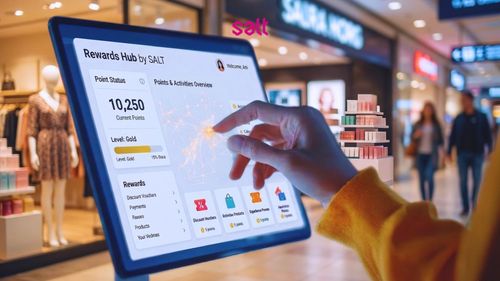
The Missing Link in Customer Loyalty: Connecting Data Across TouchpointsModern customers engage with brands across an expanding range of touchpoints—from in-store transactions and mobile apps to e-commerce platforms and messaging channels. Each interaction generates valuable data, yet in many organizations, this data remains fragmented across disconnected systems.While loyalty programs capture transactions and campaigns drive engagement, they often operate in isolation. The result is a partial and inconsistent view of the customer, making it difficult for organizations to understand behavior, personalize engagement, or measure loyalty effectiveness at scale.In an omnichannel environment, loyalty is no longer defined by transactions alone. It requires the ability to connect data across touchpoints—transforming scattered interactions into a unified, actionable customer view.The Operational Impact of Fragmented Loyalty SystemsMany loyalty programs are built to reward activity—but not to understand it. Without unified data and real-time visibility, organizations face fundamental limitations in how they engage customers.Key challenges include:Loyalty remains transaction-driven rather than behavior-drivenRewards are generic and lack personalizationCampaigns operate independently across channelsInsights are delayed and difficult to act uponAs a result, engagement becomes inconsistent, and opportunities to build deeper customer relationships are missed. Loyalty programs may appear active—but they often fail to deliver meaningful, measurable impact.Why Loyalty Programs Struggle to Deliver Real EngagementWhen loyalty systems operate in silos, the impact extends beyond customer experience into operational inefficiency. These gaps are often subtle—but over time, they limit scalability and reduce program effectiveness.Common operational gaps include:Fragmented customer data across POS, apps, and digital platformsManual reconciliation of points and rewardsDelayed or inconsistent reward fulfillmentLimited visibility into customer behavior and engagementDifficulty coordinating campaigns across multiple channelsWithout a connected system, organizations struggle to maintain consistency, speed, and control—making it difficult to scale loyalty initiatives or deliver a seamless customer experience.Rewards Hub: Building a Unified Loyalty Intelligence PlatformTo move beyond fragmented loyalty execution, organizations need more than a reward system—they need a unified platform that connects data, orchestrates engagement, and enables real-time decision-making.Rewards Hub by SALT addresses this by transforming disconnected loyalty processes into a Centralized Loyalty intelligence platform. It brings together customer data, campaign execution, and reward management into a single system—enabling organizations to deliver consistent, scalable, and insight-driven engagement across all touchpoints.A. Omnichannel Loyalty Across Every Customer TouchpointModern loyalty must follow the customer, not the channel. Rewards Hub connects all customer interaction points into a seamless, omnichannel loyalty experience. From in-store transactions to mobile apps and digital platforms, customers can earn, redeem, and track rewards consistently across every touchpoint.Value:Organizations can deliver a connected and frictionless loyalty experience, ensuring that engagement remains consistent regardless of where interactions occur.B. Centralized Loyalty Engine & Points ManagementRewards Hub consolidates all loyalty logic into a single, centralized engine—eliminating inconsistencies caused by fragmented systems. Points, rewards, tiers, and campaign rules are managed on a single platform, ensuring all transactions and entitlements are processed accurately and consistently.Value:Organizations gain full control and standardization of loyalty operations, reducing errors while simplifying program management at scale.C. Automated Campaigns & Personalized EngagementRewards Hub enables organizations to move from generic rewards to automated, behavior-driven engagement. Campaigns can be executed dynamically based on customer activity, preferences, and segmentation—allowing brands to deliver more relevant and timely interactions.Value:Loyalty becomes personalized and scalable, increasing engagement while reducing manual effort in campaign execution.D. Secure, Controlled, and Reliable Loyalty OperationsA unified loyalty system must also be secure and governed. Rewards Hub incorporates built-in controls and security mechanisms to protect transactions, data, and program integrity. From fraud detection to access governance, the platform ensures that loyalty operations remain reliable and trustworthy.Value:Organizations can operate loyalty programs with confidence, security, and compliance, minimizing risk while maintaining system integrity.E. Loyalty Analytics & Customer Insight VisibilityRewards Hub provides real-time visibility into how customers interact with loyalty programs across channels. By consolidating data into actionable insights, organizations can monitor behavior, evaluate campaign performance, and understand engagement patterns more effectively.Value:Loyalty evolves into a data-driven intelligence layer, enabling better decision-making and continuous optimization of customer engagement strategies.Rewards Hub Capabilities — Seamlessly Working TogetherBehind a unified loyalty experience is a set of interconnected capabilities that work together to support end-to-end loyalty orchestration. Rewards Hub is designed not as a collection of isolated features but as an integrated system in which each component contributes to a consistent, scalable, and insight-driven loyalty program.Core CapabilitiesAt the core of Rewards Hub are foundational components that manage the full lifecycle of loyalty programs:Point EngineTiers & BenefitsPromo & Campaign EngineFraud ControlAdmin ConsoleReporting & DashboardStrategic Value: These core capabilities ensure that loyalty programs are consistent, controlled, and operationally scalable across all channels.Supporting CapabilitiesTo ensure reliability, connectivity, and long-term scalability, Rewards Hub is built on a strong foundation of supporting capabilities:Enterprise-Grade SecurityMaintains trust, compliance, and protection across all loyalty operations.Integration & ExtensibilityEnables organizations to connect loyalty with existing customer touchpoints without disrupting current systems.Analytics & InsightsTransforms loyalty data into actionable insights, enabling continuous improvement and smarter engagement strategies.By combining these capabilities into a single platform, Rewards Hub enables organizations to move from fragmented execution to fully orchestrated, data-driven loyalty management—where every interaction contributes to a more complete understanding of the customer.Capturing the 360° Consumer Loyalty ViewWhen loyalty data is unified, organizations move beyond fragmented interactions toward a complete, connected understanding of their customers.Instead of viewing transactions, campaigns, and engagement as separate data points, Rewards Hub enables businesses to bring everything together into a single, continuous customer profile, capturing how customers interact, respond, and evolve across channels.With this unified view, organizations can:Track customer behavior across all touchpoints in real timeIdentify engagement patterns and preferencesAlign campaigns with actual customer behaviorDeliver more relevant and personalized experiencesMore importantly, loyalty is no longer limited to rewarding transactions. It becomes a way to understand intent, anticipate needs, and build stronger relationships over time.The result is a shift from fragmented loyalty execution to data-driven customer engagement. In this model, loyalty is not just a program—it becomes a strategic layer of customer intelligence that drives retention, engagement, and long-term growth.How Unified Loyalty Systems Improve Engagement Across IndustriesCustomer loyalty challenges may vary across industries, but one issue remains consistent: fragmented systems limit the ability to understand and engage customers effectively.By unifying loyalty data and orchestration into a single platform, organizations across industries can deliver more consistent, personalized, and scalable engagement strategies.a) Banking & Financial ServicesThe Challenge:Loyalty programs across credit cards, mobile banking apps, and merchant ecosystems are often disconnected, making it difficult to provide a seamless and consistent rewards experience. How Rewards Hub Helps:Rewards Hub centralizes loyalty data and connects engagement across financial touchpoints, enabling real-time reward issuance and omnichannel redemption.Outcome:Unified reward experience across channelsIncreased customer engagement and usage of financial servicesStronger customer retention and loyaltyb) FMCGThe Challenge:Consumer loyalty campaigns are often fragmented across distributors, retailers, and digital platforms—limiting visibility into customer behavior.How Rewards Hub Helps:Rewards Hub connects campaigns and customer interactions across multiple touchpoints, enabling brands to engage consumers directly and consistently.Outcome:Stronger brand-consumer relationshipsImproved campaign visibility and effectivenessScalable loyalty programs across markets and channelsc) RetailThe Challenge:Retailers often struggle to unify online and offline customer interactions, resulting in inconsistent loyalty experiences.How Rewards Hub Helps:Rewards Hub integrates POS systems and digital platforms into a single loyalty system, enabling seamless omnichannel engagement.Outcome:Consistent customer experience across online and offline channelsIncreased repeat purchases and customer retentionBetter visibility into customer buying behaviord) TelecommunicationsThe Challenge:Subscriber engagement programs are often spread across multiple platforms, making it difficult to personalize offers and track customer behavior effectively.How Rewards Hub Helps:Rewards Hub centralizes loyalty management across mobile apps, customer portals, and service platforms, enabling more targeted engagement strategies.Outcome:Higher subscriber retention and engagementPersonalized offers based on customer behaviorImproved customer satisfaction and experienceMeasurable Business ImpactOrganizations can expect tangible improvements such as:Up to 30–40% increase in customer engagement, driven by more relevant and personalized interactionsFaster campaign execution across channels, enabling real-time response to customer behaviorReduced manual effort in loyalty operations, improving speed and consistencyHigher reward visibility and redemption rates, increasing program effectivenessImproved customer retention and lifetime value (CLV) through sustained engagementThe shift is clear: from fragmented, transaction-based loyalty programs to connected, insight-driven engagement strategies that deliver measurable business outcomes.Frequently Asked Questions (FAQ)Does Rewards Hub replace existing CRM or customer data platforms?No. Rewards Hub is designed to complement—not replace—existing CRM and customer data platforms. It integrates with your current systems to unify loyalty data and orchestrate engagement across touchpoints without disrupting your existing architecture.Can Rewards Hub integrate with POS systems, mobile apps, and other platforms?Yes. Rewards Hub is built on open APIs and flexible integration capabilities, enabling seamless connections to POS systems, mobile applications, websites, and other enterprise platforms.How does Rewards Hub ensure secure loyalty transactions and data protection?Rewards Hub incorporates enterprise-grade security measures, including secure authentication, encrypted data transmission, and access controls to ensure loyalty transactions and customer data are protected at all times.Can organizations manage multiple loyalty programs or brands within one platform?Yes. Rewards Hub supports multi-program and multi-brand loyalty management, enabling organizations to run different campaigns, rules, and reward structures within a single, centralized system.How quickly can organizations launch a loyalty program with SALT?Organizations can start with a structured consultation and pilot deployment with SALT, allowing them to validate integration, engagement impact, and scalability before rolling out the program fully.Can Rewards Hub support real-time, omnichannel reward redemption?Yes. Rewards Hub enables real-time point updates and reward redemption across channels, ensuring a seamless and consistent customer experience regardless of where interactions occur.Turning Loyalty Data into Customer IntelligenceIn today’s omnichannel environment, fragmented data limits visibility, slows decision-making, and reduces the impact of engagement strategies.By unifying data across touchpoints, organizations can transform loyalty into a continuous stream of customer insight. This shift changes the role of loyalty from a transactional program into a strategic intelligence layer—one that drives personalization, strengthens relationships, and supports long-term business growth.Build Your 360° Loyalty Strategy with SALTSALT helps organizations move from fragmented loyalty execution to connected, data-driven engagement through a structured approach:Assess Loyalty Data FragmentationIdentify gaps in customer data, engagement visibility, and campaign coordination across touchpoints.Engage in a Strategic Loyalty Consultation with SALTAlign Rewards Hub with your business goals, customer engagement strategy, and existing technology ecosystem.Launch a Pilot Loyalty ProgramValidate integration, performance, and measurable impact before scaling across your organization.Breaking data silos is the first step toward building meaningful, scalable, and intelligent customer loyalty. Partner with SALT to unlock your 360° consumer loyalty strategy.
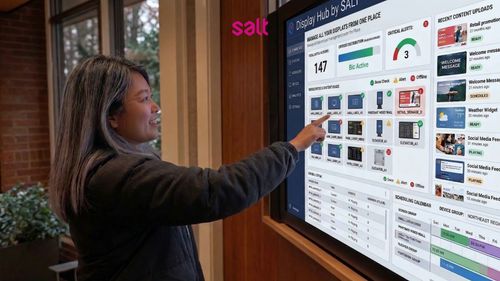
The Growing Complexity of Enterprise Screen NetworksDigital displays are now a fundamental element of contemporary enterprise settings. They are found in bank branches, retail outlets, corporate offices, transportation centers, and manufacturing sites, where they are used to showcase promotions, operational updates, safety notices, and internal communications.As organizations expand across multiple sites, their screen networks grow into complex, distributed display systems. What begins as simple signage or TV can evolve into a communication ecosystem.However, growth often leads to fragmented management systems. Without central coordination, displays may serve as isolated channels instead of a unified platform for organizational communication.When Screens Multiply, Communication Must Keep UpIn distributed organizations, screens are no longer just visual displays—they are critical communication touchpoints connecting teams, customers, and operations across locations.Managing messaging across these networks introduces several challenges:Coordinating content updates across multiple locations and screensEnsuring announcements and campaigns are delivered at the right timeMaintaining consistent messaging across branches, stores, or officesDelivering urgent information quickly to every screenWhen these processes rely on manual coordination or disconnected tools, communication becomes slower, inconsistent, and harder to manage.As screen networks grow, managing them shifts from a mere technical task to a key operational communication focus, directly affecting the enterprise’s efficiency, consistency, and responsiveness.Why Managing Screens at Scale Becomes Increasingly ComplexIn many enterprises, display networks are still managed through manual coordination or disconnected tools, creating operational gaps that slow down communication and reduce visibility.Common operational gaps include:Manual content updates across locations, requiring coordination with local teamsFragmented control of screen networks, making centralized management difficultInconsistent messaging between branches or sites, affecting brand and operational communicationDelayed rollout of campaigns and announcements across multiple screensLimited visibility into screen status and content performanceDisplay Hub: Transforming Screens into a Centralized Communication NetworkManaging individual screens is inefficient as networks expand. Screens should function as part of a coordinated system, allowing quick, consistent information distribution.Display Hub by SALT addresses this need by introducing a centralized Content Management System (CMS), designed to control, update, and monitor every screen (across Software & Hardware) from a single platform.With centralized management, organizations can coordinate messaging across locations, automate content distribution, and maintain full visibility over their display network.By transforming screens into a connected communication infrastructure, Display Hub helps enterprises deliver the right message, to the right screen, at the right time, while reducing operational complexity.A. Centralized Screen Control & Content Distribution (CMS)Display Hub provides a centralized CMS dashboard that allows administrators to manage all screens across branches, stores, offices, or public locations from one system.Key capabilities include:Centralized control of distributed screen networksLocation-based content distribution across multiple displaysScalable management for hundreds or thousands of screensBenefit:Organizations gain complete operational control over their display infrastructure, ensuring content can be updated and distributed efficiently without manual coordination across locations.B. Real-Time Messaging & Emergency BroadcastIn many operational environments, communication must be delivered instantly. Display Hub enables organizations to broadcast messages in real time across all connected screens.Key capabilities include:Instant announcement distribution across multiple locationsEmergency broadcast override for urgent messagingSynchronized communication across branches, stores, or officesBenefit:Critical updates—whether operational announcements, alerts, or urgent notifications—can be delivered immediately across the entire display network.C. AI-Powered Content Automation & Smart LayoutsCreating display content can often require design effort and coordination. Display Hub simplifies this process using AI-powered layout automation, allowing teams to generate display-ready content quickly.Key capabilities include:AI-generated layouts for announcements and messagingAutomated formatting for professional display contentPredefined templates aligned with organizational brandingBenefit:Teams can produce visually consistent display content faster, reducing reliance on manual design work and enabling quicker communication updates.D. Intelligent Scheduling & Campaign ManagementDisplay Hub enables organizations to schedule and automate content delivery across screens, ensuring that messages appear at the right time and location.Key capabilities include:Time-based content scheduling for announcements or campaignsLocation-specific content targeting across screen networksAutomated rollout of promotions and operational updatesBenefit:Marketing campaigns, operational announcements, and internal messaging can be coordinated across multiple locations without manual intervention.E. Analytics-Driven Screen Performance InsightsBeyond content distribution, Display Hub provides operational visibility into screen network performance through built-in analytics and monitoring capabilities.Key capabilities include:Real-time monitoring of screen activityContent performance tracking across displaysOperational insights into display network usageBenefit:Organizations gain data-driven visibility into how their screens are being used, enabling better decision-making and continuous improvement of display communication strategies.Display Hub Unique FeaturesBeyond centralized control and content management, Display Hub introduces advanced capabilities to enhance real-time communication, automation, and scalability across enterprise display networks.These features enable organizations to move to an intelligent, responsive, and high-impact communication infrastructure:Emergency Broadcast – One-click emergency broadcast across all connected screensDisplay Hub allows organizations to override all scheduled content instantly and deliver urgent messages across the entire screen network.AI-Powered Auto-Layout for Internal Messages – AI-generated layouts for internal communication messagesDisplay Hub simplifies content creation by using AI to automatically generate clean, branded display layouts from simple text input.Live Streaming – Live streaming across multiple screens simultaneouslyDisplay Hub enables organizations to turn their screens into a real-time broadcast network.Others:Scheduled Content Updates – Time-based automated content rollout across different screens and locations.High Scalability – Scalable infrastructure for large display networks (hundreds to thousands of screens efficiently.)Offline Mode – Offline playback with automatic sync when reconnectedAdvanced Analytics – Analytics on screen activity, content performance, and operationsEnterprise-Grade Security – Secure access control and content protection mechanismsMulti-Format Support – Video, images, motion graphics, and moreHow Centralized Display Management Improves Enterprise OperationsWhen screen networks are centrally managed, they evolve from static signage to active operational communication channels. Instead of manually coordinating updates across locations, organizations can distribute information instantly, maintain consistent messaging, and ensure every screen supports daily operations.Centralized display management enables enterprises to communicate faster, maintain brand consistency, and coordinate operational messaging across distributed locations, especially in industries where real-time information and synchronized updates are critical.a. Banking & Financial ServicesThe Challenge:Banks and financial institutions operate extensive branch networks where promotions, service updates, and compliance messages must be communicated consistently across locations. How Display Hub Helps:Display Hub centralizes screen management across branches, enabling institutions to update interest rates, product promotions, and operational announcements from a single platform.Outcome:Faster communication across branch networksConsistent customer messaging and brand presentationImproved coordination for promotional and informational updatesb. RetailThe Challenge:Retail chains frequently update promotions, product campaigns, and in-store messaging across multiple locations, often requiring coordination between marketing and store teams.How Display Hub Helps:With centralized display management, retail operators can roll out promotions, seasonal campaigns, and product messaging across all stores simultaneously.Outcome:Faster rollout of promotional campaignsConsistent in-store customer experience across locationsReduced manual coordination between headquarters and storesc. TelecommunicationThe Challenge:Telecommunication service centers frequently update service packages, promotional campaigns, and operational announcements across distributed retail outlets.How Display Hub Helps:Display Hub allows telecom operators to synchronize messaging across service centers and stores, ensuring that promotional information and service updates are displayed consistently.Outcome:Faster deployment of promotional campaignsImproved communication of service offeringsScalable management of display networks across locationsd. TelecommunicationThe Challenge:Transportation hubs such as stations, terminals, and public transit centers require real-time information displays for schedules, announcements, and operational updates.How Display Hub Helps:Display Hub enables centralized broadcasting of updates, allowing transportation operators to deliver accurate information across multiple displays in real time.Outcome:Real-time updates for passengers and visitorsFaster operational communication across facilitiesImproved information consistency across displayse. Corporate OfficesThe Challenge:In large corporate environments, internal communication across offices and departments can become fragmented, making it difficult to deliver announcements or organizational updates effectively.How Display Hub Helps:Display Hub enables organizations to use office displays as a centralized internal communication channel for company announcements, events, and operational updates.Outcome:Improved internal communication across officesFaster dissemination of company announcementsGreater visibility of organizational updates and initiativesMeasurable Operational ImpactKey operational impacts include:Up to 70–80% faster content rollout across multiple locations, enabling organizations to update messaging simultaneously across screens.Significant reduction in manual coordination efforts, as centralized management eliminates the need for local updates at each site.Improved consistency in promotional and operational messaging, ensuring every location displays the same information at the right time.Faster response to operational announcements and urgent updates, improving organizational communication speed.Better visibility into screen activity and content performance through centralized monitoring and analytics.By centralizing the management of displays, organizations convert screen networks from isolated units into a strategic communication infrastructure that facilitates more rapid operations and enhances coordinated messaging throughout the enterprise.Frequently Asked Questions (FAQ)Does Display Hub require new display hardware?Not necessarily. Display Hub can work with many existing displays, including Smart TVs and digital signage devices. Organizations can integrate the platform with their current screen infrastructure, reducing the need for additional hardware investment.Can Display Hub manage screens across multiple locations?Yes. Display Hub is designed for distributed environments, allowing organizations to manage screens across branches, stores, offices, or public spaces from a single centralized dashboard.How does Display Hub ensure consistent messaging across locations?Display Hub uses centralized content management and scheduling, enabling administrators to either distribute the same message across multiple screens simultaneously or customize content by location.Is Display Hub secure for enterprise environments?Yes. Display Hub is designed with enterprise-grade security and access controls, ensuring that only authorized users can manage content and control display networks.Can Display Hub support emergency or urgent announcements?Yes. The platform includes an emergency broadcast capability, allowing organizations to override scheduled content and instantly deliver urgent messages across all connected screens.How quickly can organizations implement Display Hub with SALT?Organizations can start with a structured consultation and pilot deployment with SALT, allowing them to test centralized display management in their environment before scaling the solution across their entire screen network.Making Enterprise Communication Faster, Smarter, and Visible EverywhereCentralized display management transforms distributed screens into a coordinated communication network, enabling organizations to deliver the right information across locations quickly and consistently.By turning display networks into a connected communication infrastructure, organizations can respond faster, maintain messaging consistency, and keep information visible across every operational touchpoint.Transform Your Display Network with Display Hub by SALTSALT helps organizations implement centralized display management through a structured and scalable approach:Assess Your Current Display Management GapsIdentify inefficiencies in manual content coordination and evaluate opportunities to centralize screen control.Engage in a Strategic Consultation with SALTExplore how Display Hub integrates with your existing display infrastructure and operational communication needs.Launch a Pilot DeploymentValidate the performance and operational impact of centralized display management before scaling the solution across your entire screen network.Transform every screen into a powerful communication channel. Contact our expert today to start building a smarter display network with Display Hub by SALT.

The Critical Role of Data Center Reliability in the Digital EconomyData centers power today’s digital economy. Banking transactions, telecom networks, retail platforms, and supply chain systems all depend on continuous uptime and infrastructure stability. In mission-critical environments, even minor disruptions can quickly escalate into financial loss and service impact.As infrastructure density increases, so does operational complexity. Modern data centers face:Higher rack density and power loadsComplex cooling and airflow managementHybrid cloud and on-premise integration24/7 service expectations with minimal downtime tolerance Yet while infrastructure operates continuously, inspection processes often do not. In an always-on environment, reliability is no longer just a technical metric—it is a strategic requirement for business continuity and resilience.Operational Blind Spots in Traditional Data Center InspectionDespite advanced infrastructure, many data centers still rely on scheduled technician patrols and manual inspection routines. While effective to a certain extent, this approach creates gaps between inspection cycles—leaving potential anomalies undetected for hours.Common blind spots include:Limited inspection frequency based on shift schedulesManual checklist documentation is prone to inconsistencyStatic sensors without physical verificationHuman fatigue and oversight risksDelayed detection of localized hotspots or airflow issuesData centers operate continuously, but human patrols do not. When inspection depends on periodic intervention, infrastructure resilience becomes reactive rather than preventive—creating exposure in environments that demand zero tolerance for downtime.Redefining Data Center Inspection Through Autonomous RoboticsTraditional inspection models cannot match the continuous nature of modern data centers. Autonomous robotics transforms inspection from periodic human patrols into continuous, data-driven infrastructure oversight.By combining independent navigation, intelligent sensing, and automated reporting, autonomous systems reduce blind spots, accelerate anomaly detection, and strengthen operational resilience—without increasing headcount.A. Autonomous Navigation & 24/7 PatrolAutonomous robots operate independently across predefined inspection routes, navigating rack corridors with precision while avoiding obstacles and adapting to dynamic environments.Key capabilities include:Scheduled and on-demand patrol cyclesObstacle detection and precision movementAuto-docking and self-chargingContinuous 24/7 inspection coverageBenefit: Inspection frequency increases significantly without shift limitations, ensuring consistent coverage across all data center zones.B. Intelligent Multi-Sensor DetectionAutonomous inspection goes beyond visual checks. Integrated multi-sensor systems monitor environmental and equipment conditions in real time.Key capabilities include:Thermal imaging for hotspot detectionVisual monitoring of rack indicatorsEnvironmental sensing (temperature, humidity)AI-driven anomaly recognitionBenefit: Early detection of localized heat buildup or abnormal conditions enables preventive action before equipment failure or service disruption occurs.C. Real-Time Data Integration & ReportingInspection data is centralized and structured for operational visibility and compliance tracking.Key capabilities include:Integration with monitoring or DCIM platformsAutomated alert generationHistorical inspection logsDashboard-based infrastructure visibilityBenefit: Operators gain continuous insight into facility conditions, improving traceability, documentation consistency, and decision-making speed.Strengthening Infrastructure Reliability Across Mission-Critical SectorsIn mission-critical industries, data center reliability affects operations, compliance, and trust. Autonomous inspection provides continuous validation where downtime isn't acceptable.a) BankingThe Challenge:High-density data center environments supporting core banking systems require near-zero downtime, while manual inspection creates blind spots between patrol cycles.How Autonomous Robotics Helps:Autonomous inspection ensures continuous rack-level monitoring, detects thermal anomalies in real time, and reduces reliance on periodic human patrols.Outcome:Reduced risk of transaction disruptionImproved uptime consistencyStronger infrastructure reliability aligned with regulatory expectationsb) Financial Services (FSI)The Challenge:FSI institutions operate complex, hybrid IT environments where infrastructure failure can impact trading systems, payment platforms, and customer data processing.How Autonomous Robotics Helps:Continuous multi-sensor inspection enables early anomaly detection and supports predictive maintenance across mission-critical systems.Outcome:Reduced infrastructure-related service interruptionsLower operational risk exposureImproved SLA adherencec) TelecommunicationThe Challenge:Telecom operators depend on stable data center infrastructure to maintain uninterrupted network services and meet strict SLA commitments.How Autonomous Robotics Helps:24/7 autonomous patrol increases inspection frequency and identifies potential environmental risks before they affect network operations.Outcome:Improved network uptimeReduced thermal-related equipment failureEnhanced service continuityd) RetailThe Challenge:Retail data centers support omnichannel platforms and point-of-sale systems where downtime directly impacts revenue and customer experience.How Autonomous Robotics Helps:Autonomous inspection ensures continuous infrastructure oversight, reducing the likelihood of unexpected system outages during peak operational periods.Outcome:Reduced revenue-impacting downtimeGreater operational stability during high-traffic periodsImproved infrastructure visibilitye) FMCGThe Challenge:FMCG operations rely on stable ERP and warehouse systems, where infrastructure disruptions can affect distribution and supply chain efficiency.How Autonomous Robotics Helps:Continuous environmental monitoring enables proactive identification of risks that could compromise warehouse and logistics systems.Outcome:Reduced supply chain disruption riskIncreased infrastructure reliabilityMore consistent operational performanceMeasurable Operational ImpactImplementing autonomous robotics in data center inspection delivers measurable improvements across efficiency, risk mitigation, and infrastructure visibility:Up to 3–5x increase in inspection frequency without additional staffing, ensuring more consistent rack-level coverage.Up to 50% faster anomaly detection, particularly for localized thermal irregularities and environmental fluctuations.Reduced manual patrol hours by 30–40%, allowing technicians to focus on remediation and strategic maintenance tasks.Lower risk of thermal-related downtime, helping prevent incidents that could result in costly service disruption.Improved documentation accuracy & traceability, strengthening audit readiness and operational reporting.As infrastructure density increases, autonomous inspection transforms oversight from periodic validation into continuous operational intelligence—reducing blind spots while improving resilience and cost efficiency.Frequently Asked Questions (FAQ)Does SALT’s autonomous inspection solution replace data center technicians?No. SALT’s Physical Automation solution is designed to enhance—not replace—data center teams. Autonomous robots handle routine patrol and monitoring tasks, allowing technicians to focus on remediation, optimization, and higher-value operational priorities.How does autonomous inspection integrate with existing DCIM or monitoring systems?Autonomous robotics integrates with DCIM and monitoring platforms, providing real-time environmental data, alerts, and structured inspection logs that complement existing dashboards and operational workflows.Is it safe to deploy robots in high-density rack environments?Yes. Autonomous inspection systems are equipped with precision navigation, obstacle detection, and controlled movement protocols, ensuring safe operation in confined rack corridors and temperature-sensitive zones.What happens when the robot detects an anomaly?When an anomaly is detected—such as abnormal temperature or environmental deviation—the system generates alerts with visual and thermal evidence, enabling rapid human intervention and minimizing escalation risk.Can SALT deploy autonomous inspection across multiple data center sites?Yes. SALT supports scalable deployment models, enabling organizations to implement autonomous inspection across single or multi-site data center environments with centralized monitoring and reporting.How quickly can organizations start a pilot deployment with SALT?Organizations can begin with a structured assessment led by SALT to identify inspection gaps and operational priorities, followed by a pilot deployment to validate performance, coverage, and measurable impact before full-scale rollout.Building Always-On Infrastructure with Intelligent RoboticsModern data centers operate without pause, and infrastructure oversight must follow suit. Autonomous robotics transforms inspection from periodic human patrol into continuous, intelligent infrastructure assurance, reducing blind spots and strengthening operational resilience.By shifting routine inspection to always-on autonomous systems, organizations protect uptime, reduce operational risk, and elevate human intervention to where it matters most—strategic decision-making and rapid remediation.Transform Your Data Center Inspection Strategy with SALTSALT helps enterprises implement Physical Automation through a structured and scalable approach:Assess Current Inspection GapsIdentify blind spots, risk zones, and inefficiencies in manual patrol workflows.Engage in a Physical Automation Consultation with SALTAlign autonomous inspection capabilities with your operational and SLA priorities.Launch a Pilot DeploymentValidate performance, integration, and measurable impact before scaling across facilities.Always-on infrastructure deserves always-on intelligence. Partner with SALT to redefine data center inspection for the next generation.
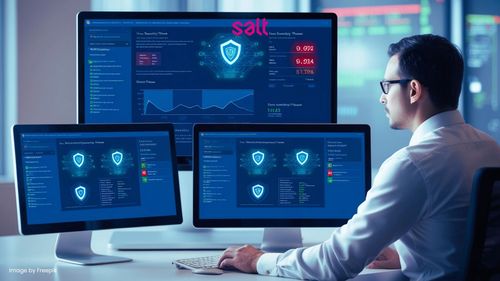
The Escalating Cyber Threat Landscape in Modern BankingBanking institutions operate in one of the most targeted cybersecurity environments today. The expansion of digital banking, mobile platforms, open APIs, and third-party integrations has significantly widened the attack surface.Financial data and transaction systems are high-value targets, making banks attractive to ransomware groups, credential theft operations, and insider threats.At the same time, regulatory expectations are intensifying. Banks are required to maintain continuous protection, rapid incident response, and strict governance controls. A single breach can lead to:Regulatory penalties and compliance violationsOperational downtime and service disruptionFinancial losses and remediation costsLong-term reputational damage and customer trust erosionCybersecurity is no longer an isolated IT function. In modern banking, it represents a board-level risk tied directly to financial stability, regulatory confidence, and institutional credibility.The Real Vulnerability: When Detection Doesn’t Equal ProtectionMany banks already have monitoring tools in place. However, alerts without immediate action do not prevent breaches. When detection relies on manual triage, limited SOC coverage, or fragmented systems, response time slows—and risk escalates.Common gaps include:Alert fatigue and delayed escalationMonitoring is limited to business hoursManual investigation and containment processesSecurity talent shortagesIn high-value banking environments, even short delays increase breach impact. Detection alone is not protection—speed of response determines the outcome.Why Traditional Security Monitoring Falls ShortTraditional security monitoring was built for slower, perimeter-based environments. In modern banking ecosystems—where cloud, APIs, mobile platforms, and third-party integrations operate continuously—periodic reviews and reactive monitoring are no longer sufficient.Common limitations include:Business-hours monitoring instead of 24/7 coverageManual incident response and patching delaysIsolated tools without orchestrationCompliance-driven checks rather than threat-driven protectionAs threats evolve in real time, security must operate the same way. Without continuous monitoring and automated response, even well-equipped institutions remain exposed.Building a 24/7 Automated Security Operations ModelIn banking, threats do not wait for business hours—and neither should security. A 24/7 security operations model ensures that monitoring, detection, and response run continuously, reducing exposure time and limiting breach impact.By combining: Automation, AI-driven Analytics, and Structured Response Workflows, security shifts from reactive investigation to real-time protection and rapid containment.A. Continuous Threat Monitoring & AI-Driven DetectionEffective 24/7 monitoring goes beyond log collection. It uses behavioral analytics, anomaly detection, and integrated threat intelligence to identify suspicious activity across networks, endpoints, cloud systems, and APIs.Key capabilities include:Real-time anomaly detectionCross-platform visibility (network, endpoint, cloud)AI-prioritized threat alertsContinuous monitoring without human dependencyBenefit: For banking and FSI institutions, continuous monitoring reduces blind spots, shortens detection time, and strengthens early-warning capabilities—helping prevent minor anomalies from escalating into full-scale data breaches.B. Automated Threat Containment & Rapid ResponseDetection alone is not enough. Automated containment ensures that once a threat is identified, response actions begin immediately, reducing dwell time and limiting lateral movement.Key capabilities include:Predefined incident response playbooksAutomated isolation of compromised systemsRapid vulnerability prioritization and patchingReduced Mean Time to Detect (MTTD) and Respond (MTTR)Benefit: By accelerating containment and remediation, banks can significantly lower breach impact, minimize operational disruption, and protect sensitive financial data before damage spreads across interconnected systems.C. Compliance-Ready Reporting & Executive VisibilityFor banking and FSI institutions, security must also support regulatory transparency. A modern 24/7 model provides structured, audit-ready documentation and executive dashboards.Key capabilities include:Centralized reporting aligned with regulatory frameworksTraceable incident logs and response recordsContinuous compliance visibilityClear, board-level security insightsBenefit: With real-time reporting and documented response records, organizations improve regulatory confidence, simplify audits, and provide executive leadership with clear visibility into risk posture and security performance.What 24/7 Security Monitoring Means for Banking & FSIFor Banking and Financial Services institutions, cybersecurity is directly tied to financial stability, regulatory trust, and customer confidence. A breach is not just a technical failure—it is a business crisis.Industry Risk ContextBanks and FSI organizations manage highly sensitive financial data, high-value transactions, and interconnected digital ecosystems. Cyber incidents can lead to:Regulatory penalties and compliance violationsFinancial losses from fraud or system compromiseService outages affecting customer accessLong-term reputational damageOperational Complexity:Core banking infrastructureMobile and online banking platformsAPI integrations with fintech partnersHybrid cloud and on-premise systemsStrict segregation of duties and access controlsThis complexity expands the attack surface and increases the difficulty of maintaining continuous visibility using traditional monitoring models.How 24/7 Monitoring Changes the Risk EquationWith automated, continuous monitoring in place:Threats are detected in real timeSuspicious behavior is correlated and prioritized using AIIncident containment begins immediatelyVulnerabilities are identified and patched fasterCompliance documentation is generated continuouslyInstead of reacting after an impact occurs, institutions proactively reduce dwell time and limit breach escalation.Outcome for Banking & FSI:Reduced breach impact and faster containmentLower regulatory exposureStronger customer trustImproved operational resilienceSecurity becomes a stabilizing force, not a reactive emergency response.Measurable Business ImpactReduced Mean Time to Detect (MTTD) by up to 50–70%Reduced Mean Time to Respond (MTTR) by up to 60%Reduced breach dwell time (global studies showing avg. attacker dwell time can exceed 200 days without continuous monitoring)Lower breach costs, as financial sector data breaches average over USD 5 million per incidentContinuous compliance readiness, minimizing regulatory exposure, and audit remediation costs.Frequently Asked Questions (FAQ)Does SALT’s 24/7 Security Monitoring replace our internal SOC team? No. SALT’s 24/7 Security Monitoring is designed to enhance—not replace—your internal security team. Continuous monitoring and automated response workflows provide round-the-clock coverage, while your internal team focuses on governance, risk strategy, and executive oversight.How does automation reduce breach impact? Automation shortens Mean Time to Detect (MTTD) and Mean Time to Respond (MTTR) by triggering predefined containment actions immediately after threat detection. Faster response directly reduces dwell time and limits data exposure.If we already use SIEM tools, why consider SALT’s 24/7 monitoring? Traditional SIEM platforms provide visibility, but without automated orchestration and continuous response, alerts can remain unaddressed. SALT integrates monitoring, automation, and structured response workflows to ensure detection is immediately followed by containment and remediation.How does SALT support regulatory compliance for Banking and FSI institutions? SALT’s 24/7 monitoring model generates structured logs, documented incident records, and audit-ready reports aligned with regulatory and governance frameworks. This strengthens compliance posture while improving transparency for regulators and executive stakeholders.Can 24/7 monitoring cover hybrid cloud and on-premise environments? Yes. Modern security operations integrate across networks, endpoints, cloud workloads, APIs, and third-party systems—providing centralized visibility across distributed banking environments.How quickly can organizations get started with SALT’s 24/7 Security Monitoring? Organizations can begin with a structured security assessment led by SALT, followed by a pilot phase to evaluate monitoring coverage and response maturity before scaling to full deployment.Shifting From Reactive Security to Continuous ProtectionCyber threats operate continuously, and so must protection. In modern banking environments, relying on reactive monitoring exposes institutions to unnecessary risk. The shift to 24/7 automated security is not a technical upgrade—it is a strategic decision to protect financial integrity, regulatory trust, and customer confidence.Continuous protection reduces dwell time, accelerates response, and strengthens resilience. When monitoring, detection, and containment operate in real time, security becomes proactive rather than reactive.Strengthen Your Enterprise Security Posture with SALTSALT helps Banking and Financial Services institutions transition from reactive monitoring to automated, 24/7 protection through a structured approach:Assess Your Current Monitoring Maturity Identify gaps in detection, response speed, and coverage.Engage in a Strategic Cybersecurity Consultation with SALT Align automation with your regulatory and operational priorities.Launch a 24/7 Monitoring Pilot Validate performance and impact before full-scale deployment.Continuous protection begins with a strategic move. Partner with SALT to build resilient, always-on security operations.
The Compliance Pressure Is Rising — Manual Audits Can’t Keep UpEnterprise environments are expanding rapidly—cloud platforms, SaaS tools, DevOps systems, and distributed workforces have multiplied user accounts and access layers. At the same time, regulatory demands (ISO 27001, internal controls, industry compliance frameworks) require consistent validation, traceable evidence, and stronger governance discipline.Compliance is no longer periodic—it is continuous.Yet many organizations still rely on manual access reviews. This creates structural pressure across the enterprise:Spreadsheet-based tracking and manual comparisonsScreenshot collection for audit evidenceRepetitive validation against approved access listsReactive documentation before audit deadlinesThe result is clear: manual audits cannot scale with the complexity of modern enterprises.When governance remains manual while systems grow more dynamic, risk exposure increases—and compliance becomes a recurring operational burden instead of a controlled process.The Real Problem: Manual Access Reviews Create RiskManual access reviews are not just inefficient, they introduce systemic governance risks. When validation depends on human comparison, spreadsheet updates, and periodic checks, the process becomes vulnerable to oversight, inconsistency, and delay.In practice, this creates multiple hidden exposures:Privilege creep, where access rights accumulate without proper revocationUndetected unauthorized access due to infrequent review cyclesInconsistent validation results across departments or reviewersDelayed remediation, allowing risk to persist longer than intendedAs enterprise systems scale, these risks compound. Manual reviews may provide temporary documentation, but they do not deliver continuous assurance.Over time, governance becomes reactive instead of preventive—leaving organizations exposed to compliance findings, operational disruption, and reputational risk.Why Traditional Access Governance Falls ShortMany enterprises already have Identity and Access Management (IAM) systems in place. However, most traditional access governance models focus on provisioning and deprovisioning rather than continuous validation. Access may be granted correctly at the beginning—but without automated oversight, it can drift over time.This gap creates structural limitations:Periodic reviews instead of real-time validationManual evidence generation for auditsLimited visibility across multiple platforms and environmentsReactive compliance posture, triggered only before audit deadlinesAs digital ecosystems expand, relying solely on traditional access controls is no longer sufficient. Enterprises do not just need access management—they need automated access assurance that continuously validates permissions, enforces policy alignment, and keeps governance aligned with operational reality.Access Audit Pro: Turning Access Governance into an Autonomous SystemEnterprises do not need more manual reviews—they need automated assurance. Access Audit Pro transforms access governance from a periodic task into a continuous, autonomous process that validates user permissions, detects deviations, and generates audit-ready evidence in real time.Instead of adding complexity, it introduces a controlled automation layer that reduces manual intervention, strengthens compliance posture, and enables governance to scale alongside business growth.The Smart Layer for Enterprise ComplianceAccess Audit Pro works with existing governance frameworks—not around them. It does not replace IAM systems or policy structures; it enhances them with automated validation and evidence generation.By continuously comparing actual system access against approved User Access Control Lists (UACL), it ensures that permissions remain aligned with policy.The result is consistent enforcement of least privilege, segregation of duties, and compliance controls—without operational disruption.How Access Audit Pro WorksAccess Audit Pro simplifies access validation into an intelligent, automated flow:Setup & InitiateDefine the approved access baseline (UACL) and trigger the audit.Automated Access CollectionAI-driven agents securely log into target systems and extract user-role data.Compare & Detect DeviationsActual access is validated against approved controls.Evidence Capture & StorageScreenshots and validation results are stored in a centralized repository.Automated Report GenerationCompliance-ready reports are generated and shared instantly.With one-click execution or scheduled runs, enterprises move from spreadsheet-based audits to real-time, traceable, and scalable governance automation.Proven Impact Across IndustriesAccess governance challenges vary by sector, but manual reviews consistently create compliance gaps and operational strain. Here are some of the industry challenges Access Audit Pro aims to address.a) BankingThe Challenge:Strict regulatory oversight, frequent audits, and complex legacy systems make manual access validation slow, high-risk, and difficult to scale.How Access Audit Pro Helps:Automates validation against approved access controls and enforces least privilege.Outcome:Faster audit cyclesReduced regulatory exposureContinuous audit readinessb) Financial Services (FSI)The Challenge:Multi-platform environments and DevOps workflows create fragmented access control and limited visibility across systems.How Access Audit Pro Helps:Validates access across development and production systems while centralizing compliance evidence.Outcome:Stronger governance controlImproved traceabilityLower operational riskc) TelecommunicationsThe Challenge:Large user volumes and frequent access changes make manual reviews inconsistent and unsustainable.How Access Audit Pro Helps:Enables scheduled, automated validation across distributed systems.Outcome:80% faster review preparationReduced privilege creepScalable governanced) FMCGThe Challenge:Complex ERP and SaaS ecosystems create visibility gaps and unused or misaligned access permissions.How Access Audit Pro Helps:Automates user-role validation and identifies inactive or duplicate accounts.Outcome:Reduced licensing wasteImproved control visibilityStronger internal compliancee) RetailThe Challenge:High staff turnover and omnichannel systems increase the risk of outdated or excessive access rights.How Access Audit Pro Helps:Continuously validates permissions and generates automated audit evidence.Outcome:Reduced data exposure riskFaster compliance reportingAlways audit-ready operationsMeasurable Business OutcomesWhen access governance becomes automated, the impact is immediate and measurable. Access Audit Pro delivers tangible improvements across speed, consistency, cost, and compliance visibility.Up to 80% faster audit preparation100% consistency in validation resultsReduced manual workload for IT & compliance teamsLower compliance and regulatory risk exposureOptimized licensing and access cost controlThe shift is clear: from reactive, time-consuming audit cycles to real-time, automated access assurance—built for scale, security, and sustained compliance.Frequently Asked Questions (FAQ)Does Access Audit Pro replace our existing IAM system?No. Access Audit Pro does not replace your Identity and Access Management (IAM) platform. It enhances existing governance frameworks by automating access validation and audit evidence generation, ensuring continuous assurance without changing your current policies.Is it secure to allow automated access to enterprise systems?Yes. SALT designs Access Audit Pro for enterprise-grade security environments, supporting secure authentication handling, including 2FA integration. All validation processes are executed through controlled automation and standardized evidence storage, aligned with governance and compliance requirements.Can Access Audit Pro integrate with platforms beyond Microsoft 365, GitLab, and Jira?Yes. The automation engine is designed to be extensible and can be configured to validate additional enterprise systems without altering your governance structure.How often can audits be executed?Audits can be triggered manually or scheduled on a daily, weekly, or compliance-driven basis, enabling organizations to move from periodic reviews to continuous validation.Where are audit evidence and reports stored?All screenshots, validation outputs, and compliance reports are stored in a centralized repository (e.g., SharePoint), ensuring traceability and audit readiness at any time.How quickly can organizations start seeing value?Through a structured engagement with SALT, organizations can begin with a pilot (POC) to validate impact in their environment. Many enterprises experience measurable efficiency gains and reduced audit preparation time within the first automated review cycle.Let's Move from Manual Reviews to Real-Time AssuranceManual audits were built for a different era. Today’s enterprise environments demand continuous validation, automated evidence, and scalable governance. The shift from spreadsheet-based reviews to real-time assurance is no longer optional—it is a strategic decision to reduce risk and strengthen compliance maturity.Automation transforms access governance from a recurring burden into a controlled, intelligent process. When validation runs continuously, compliance becomes proactive—and confidence becomes measurable.Start Your Governance Transformation with SALTSALT helps enterprises transition from manual access reviews to automated, real-time assurance through a structured and secure approach:Assess Your Current Audit GapsIdentify where manual processes create delays, inconsistencies, or compliance risk.Engage in a Strategic Session with SALTExplore how Access Audit Pro integrates into your existing governance ecosystem.Launch a Pilot (POC)Experience automation impact in your real environment before full-scale deployment.The end of manual audits begins with one strategic step. Partner with SALT to build continuous, intelligent access governance.